Keep your team safe, reduce risk, and stay on top of your compliance obligations with professional appliance testing and tagging. Green Technology Group Ltd makes the process simple – fast on-site testing, clear records, and practical support.
Why it matters
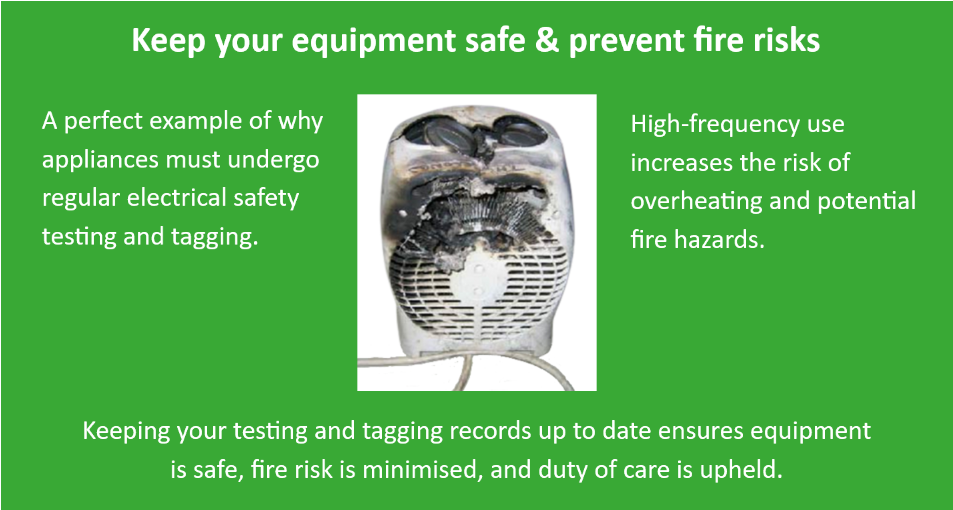
Testing and tagging helps you demonstrate that electrical equipment is being checked and is maintained in a safe condition. While the exact approach is up to the PCBU, routine testing provides a snapshot of safety at the time of inspection and helps you identify items that need repair or removal from service.
For schools and many workplaces, regular checks also support health and safety duties by ensuring appliances remain electrically safe and fit for use.
- Reduce risk: Identify damaged leads, insulation faults, and unsafe appliances before they cause a shock or fire. RCD protection is also important, particularly in outdoor and damp areas.
- Minimise disruption: Batch testing can be planned around your operations, reducing urgent callouts.
- Stay audit-ready: Clear records make it easy to demonstrate proactive safety management.
- Get practical next steps: We flag priorities and can often repair issues on the spot (where agreed).
What we do
- On-site testing and tagging of portable appliances and equipment
- Testing will be in accordance with standard AS/NZS 3760:2022, the Electrical (Safety) Regulations 2010 (ESR), the Electrical (Safety) Amendment Regulations 2025, and for construction sites, AS/NZS 3012.
- You will receive a complete register for your site (digital and printed) listing every item tested, pass/fail results, testing details and notes.
- We will repair failed items on the spot where this is possible, record the work completed, and clearly identify anything that failed and is beyond a quick fix (needs replacement or specialist repair).
- RCD (Residual Current Device) testing
- RCDs of all kinds perform a valuable function - protecting people from shocks, protecting systems from damage, and reducing fires from malfunctions. We test in line with AS/NZ 3760:2022 to ensure it responds correctly to a fault, quickly.
- Re-testing of repaired appliances
- After an appliance has been repaired or maintained, NZ standards require an authorised person to verify its electrical safety. We can carry out post-repair inspections and testing in line with AS/NZS 5762:2011, helping you return equipment to service with confidence.
- Testing of second-hand appliances
- Before using a second-hand appliance or piece of equipment, an authorised person must verify its electrical safety. We carry out inspections and testing in line with AS/NZS 5761:2011, so you can use them with confidence.
- Earth Fault Loop Impedance (EFLI) testing
- This specialised test checks that your circuit breakers, fuses and RCDs operate correctly and quickly when an electrical fault occurs. A delay or failure puts your circuits at risk of overheating and is a leading cause of electrical fires in NZ workplaces. We perform testing in line with AS/NZ 3017:2022 and AS/NZS 3000:2018, so you can have full confidence in your electrical systems.
- Before first use: Repaired or serviced equipment, second-hand equipment.
- 3 months: Construction sites, hire equipment, most RCDs.
- 6 months: Factories, workshops, manufacturing sites, and commercial cleaning equipment.
- 12 months: Most office appliances and general electrical equipment - cords subject to flexing, overuse/abuse, or operating in hostile environments (e.g. outside).
- 2 years: Residential-style environments like hotels, hostels, accommodation.
- 5 years: Servers, power cords for desktop computers and monitors - cords not subject to flexing, overuse/abuse, and not in a hostile environment (e.g desk or server room).
Recommended testing frequency
The right testing interval depends on where and how the equipment is used, its age, condition, and warranty requirements. High-use, outdoor, or damp environments typically need more frequent testing than low-risk office equipment. We can help you set a practical schedule based on your site, your risks, and your obligations.
Typical recommendations: